The following story was told to me in 1976 by Tom Kau, a Numbami man who was a noted traveler and storyteller nicknamed “Samarai,” because he had once spent time there. Listen to the full story in Numbami here:
Mayaŋgo kole goiya tema.
We saw one elder man.
Iyou iya wamba kikiyama.
He was fishing in the dark.
Ena ase Ŋguwoŋ.
His name was Ŋguwoŋ.
Kate, api, ilu makata e maŋgo, “Numa!”
So then we called him, saying “Come!”
Ipi ima ka eli e iŋgo “Ipaka?”
He came up, like, then he said “What’s up?”
“O, mama. Nombi laisi tatena nuwosa iŋgo noni
“O, we came. Take this rice and go for you to eat
“wa ilu manaambi ditako su kauti
“and we’ll take a little in a cloth
“manawasa mananisi niye wowola;
“we’ll go cook it on the way;
“manani wai, manawasa Opoi.”
“after we eat it, we’ll go to Hopoi.”
“O, indeŋama kote.”
“O, that won’t do.”
Waŋgo “O, indeŋama go nombi.”
I said, “O, it’s okay, so take it.
Biŋa te kote.
“It’s not for discussion.
Ilumandi nomba maki deŋa aiya.”
“It’s our thing we are giving you.”
E iki danke deŋ ilu wai te
After he thanked us,
tako, indosuwa isagawi ena bani indo te
he sat down and was looking after his food,
ilu payama makota tina masakie teulu.
so we went ahead and crossed the river climbed out the other side.
Mapaandalowa ka mapaandalowa ka
We walked and we walked and
malaaa masu koe tiŋgo Tiakiŋ.
we kept going over there they call Tiyakiŋ.
Ilu ma weke wai mala masuwa, mandosuwa nato
After we left we went, we reached, we sat down there
wa ilua mawaluŋu ilumandi yabokole,
and we rolled our tobacco,
mani buwa,
we chewed betelnut,
ilu manisi ilumandi bani iye nato
we cooked our food at that place.
Mani beleya wa mapaandalowa.
We finished eating and walked on.
The following story was told to me in 1976 by Tom Kau, a Numbami man who was a noted traveler and storyteller nicknamed “Samarai,” because he had once spent time there. Listen to the full story in Numbami here:
Suwa 1941, i mawalaŋa Wasutiyeŋ wai.
In 1941, we had left Wasutiyeng [school at Finschhafen].
Mama su Opoi
We came to Hopoi [Mission Station on Cape Arkona]
Mawiliya lawa lain matana.
We replaced the earlier group [of students].
Wa, api tako, mama su teteu.
and then, okay, we came to the village.
Mama su teteu, eli, api tako,
We came to the village and then, then okay,
Iŋgo mandisa iwou nate,
When we arose again [the next day] here,
Wambi naŋgi kapa kae Sele totoma.
I brought my younger brother Sele along
Wa ewa tupe.
And a short woman.
Ito mawasa, mawasa Opoi
We three, we went, we headed for Hopoi.
Mawasa mami, tako,
We kept on going, okay,
kole goiya tema ipai kulakula goli na imi Blaget.
One big man, he was working gold at Blaget.
E naŋgi tambu tema, naŋgi lawa bamo.
He was one of my in-laws, my elders.
Ima indo iŋgo,
He came over to me and said,
Manu munaŋgewe ewesika wa kolapkakapi munawasa totoma kote.
“Don’t take the women and small children with you.
A iŋgo munaŋgewe munawasa munami,
“While you’re taking them, maybe
towambana mo gaya nate, lauwa nima
“tonight or tomorrow, war will come.
Lawa Ziapan a inama.
“Japanese people might come.
Eta bumewe iŋgo te
“That’s what a whiteman said, so
I manzolo eta mama iŋgo manawasa teteu etate
“we scattered, so we came here in order to go to the village.”
Tako, iŋgo biŋa na deŋa i.
Okay, he said these words to us.
Asini towambana wai te api mando iŋgo imisina,
It was already night in Asini, so then we stayed until dawn,
3 kilok wa i mawoti mama su BP.
at 3 o’clock and we came down to BP.
Tako, mapi Bawalia.
Okay, we boarded [MV] Bavaria.
Madodomu ka mami mami mami mami mami
We ran on and on and on and on and on,
imisina iye Lae, Voco Point.
it dawned at Lae, Voco Point.
Tako, mayaŋgo inami biŋsu Lene iwoti.
Okay, we saw our missionary Lehner come down.
Iŋgewe biŋsu bamo na aindi ewesika ima imi,
He was bringing most of the missionary’s wives,
Tiki pi waŋga aidudu tiwesa su koe Mosbi.
they put them aboard an airplane to go over to Moresby.
Payama iŋgo inawasa Ostrelya.
Ultimately so they would go to Australia.
Tako, iwoti ima iwalasa iyoŋgo i,
Okay, he came down, stopped and saw us.
Iki wambanama; i maki wambanama deŋa e.
He said, “Morning”; we said “Morning” to him.
Beleya wai te, iŋgo “mumi wiyama?”
After that, he said “Are you all right?”
Wa i maŋgo “mami wiyama.”
and we said, “We’re all right.”
Tako, tiki waŋga isoloŋa ele
Okay, they put the boat in, and then
Iŋgewe iwoti ima iki pi waŋga
he brought [us all] down and put [us] on the boat,
wa eli wala waŋgo de biŋsu waŋgo “biŋsu yei,
and then, I went and said to the missionary, I said, “Hey missionary,
woya, ilu naŋgi kole koena, ilu manakosa.
“I, we two, my man there, we two will disembark.”
“Kole sai?”
“Which man?”
Woya te waŋgo “Gau.”
I answered, “Gau.”
Amula munakosa niu sawa na,
“Why will you disembark?”
O, ilu manayaŋgo ena sika wago ta,
“O, we’ll see his elder brother first, then
Gaya go manapaandalowa bouna manauwa.
tomorrow we’ll walk overland toward you.”.
“O, indeŋama.”
“O, all right.”
Ikanate ai tembi Bawalia payama
So they all took MV Bavaria,
Eta tisu Bukawa tiwesa,
so they went off to Bukawa,
wa ilu makosa mami Lae indeŋama wamba te wai.
and we got off and stayed a night in Lae.
Gaya ilu mambi bek laisi te,
The next day, we got a bag of rice,
sika wa ilu mandi paus to wambala ma.
the elder brother and our (two) pouches with baggage.
Wa tem nato, api tako, maiye mando,
and that time, then okay, we slept on,
wamba kikiyama, mandisa iye koe Ampo.
before dawn, we got up over there at Ampo.
Mama su koe Malahaŋ.
We came over to Malahaŋ.
Makota Tina Mala mama,
We came across the Mala River,
api ipai ilu tawiti bamo anoma.
then it made us very sad.
Ŋaomgo lauwa iŋgo nima ikana.
Because war could arrive like this.
Ipai ilu tawiti bamo anoma
It made us very sad.
Wa api ipai ilumandi tawiti.
and it made both of us sad.
Ilu, api ipai ilu iu wau.
We, it made us become foul.
Takalama walongoni inggo nanggi tolou kulumungga na, Alisa Kopu (AK), imande wai. Su 1976, manu woya bembenama wama wami teteu Siboma na, e ikamba ata Panett (< Tinipa). E imi Lae inggo ipai kulakula Mabosi Transport na. Masese e iso ailau katalu denga woya indengama inggo e niu nanggi “correspondence school” kiduwaga Binga Numbami na. E iseya woya iu nanggi na wa woya waso ailau iwesa iwiliya. AK inggo gala didi wa ipai woya wamomola wamande anoma.
Su kolegedo wau na, MV Sago na lawa wangga na (boskru) tinumu tina maya tiwalanga ata. AK iwaya dabatumi wa iyonggo camera, itaminga Jeff Siegel. Woya tawiti bambamo su AK. Waki ena ailau luwa na gedo iye owe. Sai te ninggo niwete, indengama inggo niso Download.
The location where the current Kui village is belongs to the Sakia clan of Bapi. Indeed, the Sakia clan of Bapi village were settling inland on the land known as Bisadro (Pisadro) before they moved back to Bapi village because they were tired being used by Siboma people to do all the work for the white men. It was the Sakia clan leaders that asked certain Kuwi family to come and settle in the bay now known as Kuwi village. The rest of the Kuwi people moved in later. The land boundaries between Paiawa, Siboma, Sakia clan of Bapi and Kuwi were demarcated during 1964 Land Titles Commission Hearing. This could also help to explain the territories of the Paiawa, Siboma, Sakia clan of Bapi and Kuwi.
I am one of the descendants of the Sakia clan living in the Siboma village now. Abu bamo (Gigitaia bamo or kandel bamo) is truly a Bapi man. I went to the National Court in 1999 to seek the reinforcement of Land Titles Commission Decision in 1964, and National Court upheld my appeal. So while I am a Siboma man, I am also a Sakia clan member of Bapi village.
Joel, I met you during your recent visit to Siboma, passing through Port Moresby. We had dinner together at Sagowa Langa’s place, together with Jacob Sawanga. In fact, I attended your farewell party in the Siboma village in 1976 after I completed Grade 10 at the Bumayong high school.
Dr. Gae Gowae
Environmental Science & Geography, UPNG
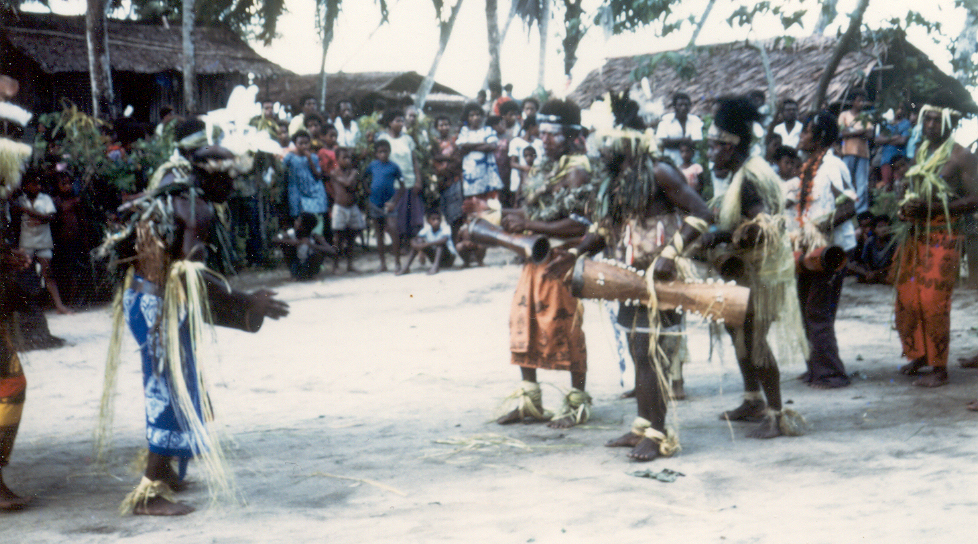
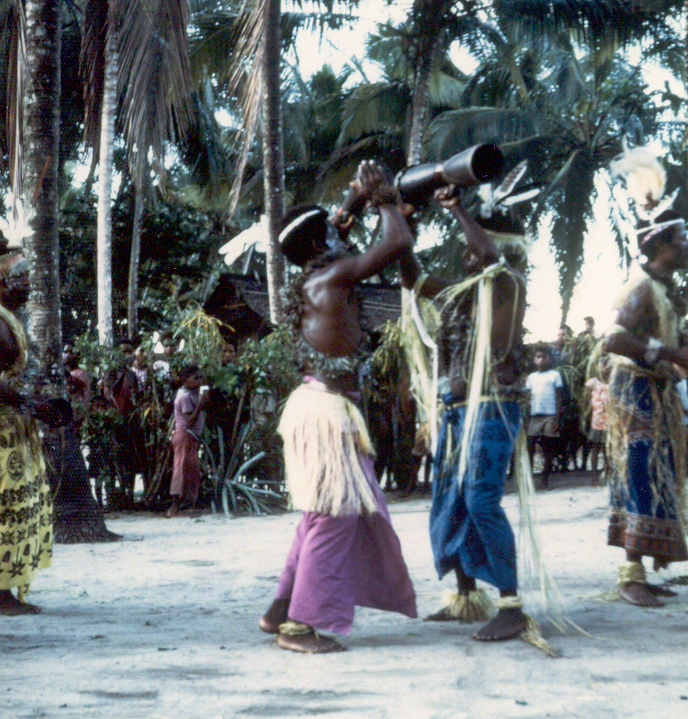
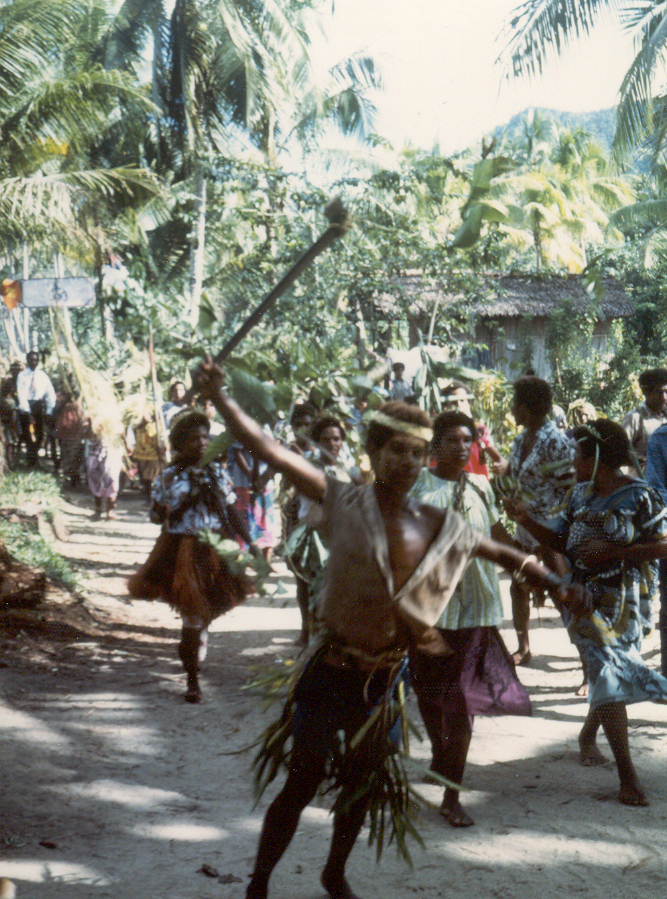
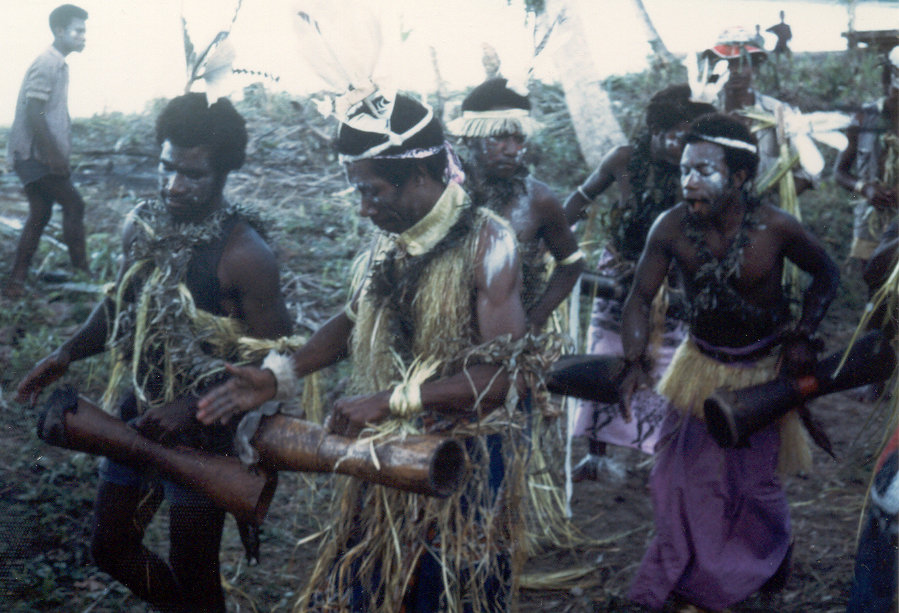
On the way back from the 1976 Sam, young men and women from the Numbami delegation performed their Singsing Baruga at Kela village (called Manindala in the Kala language), with whom the Siboma villagers had helped sponsor delegates. Here are a few photos from that performance.
The following story is one I translated from the Jabêm-language Buku Sêsamŋa II [Book for reading, 2nd ed.], by Rev. M. Lechner and Nêdeclabu Male (Madang: Lutheran Mission Press, 1955), pp. 10-11:
Mec bôc kê-tôp-ŋa
magic pig 3sR-grow-for
Magic to grow pigs
Lau Sibôma sêsôm mec teŋ kêpi soŋgaluc
people Siboma they-say magic one it-upon pufferfish
Siboma people say a kind of magic on the pufferfish
ma sêsôm teŋ kêpi m
and they-say one it-upon banana
and they say one on the banana
gebe bôc têtôp ŋajam.
say pig they-grow good
so that pigs grow well.
Sêsôm kêpi soŋgaluc
they-say it-upon pufferfish
They say it on the pufferfish
gebe i tonaŋ embe daŋguŋ nga sao êndu
say fish that if we-spear with fishspear dead
because when we spear that fish dead
ma têtacwalô êsung êtu kapôêŋ sebeŋ
and its-belly it-swell it-turn large fast
then its belly will swell up big quickly
ma bôc êtôp êtôm i tonaŋ
and pig it-grow it-match fish that
then the pig will grow like that fish
têtac kêsuŋ kêtu kapôêŋ sebeŋ naŋ.
its-belly it-swell it-turn big quick REL
whose belly swells up big quickly.
Ma sêsôm mec teŋ kêpi m
and they-say magic one it-upon banana
And they say magic on the banana
ŋam gebe bôc êtôp êtôm m,
reason say pig it-grow it-match banana
so that the pig will grow like the banana,
naŋ tasê kêsêp kôm
that we-plant it-into garden
that we plant in the garden
ma kêpi ŋadambê kapôêŋ me gêuc sebeŋ
and it-rise trunk large or it-stand.upright quick
and its trunk grows or stands upright quickly
e ŋanô kêsa ma kêtu lêwê,
until fruit it-rise and it-turn ripe,
until its fruit appears and turns ripe,
ma bôc êtop sebeŋ amboac tonaŋgeŋ.
and pig it-grow quick like that-Adv
then the pig will grow quickly in the same way.
The following story was told to me in 1976 by a Numbami man who was a noted traveler and storyteller whose nickname was “Samarai,” because he had once spent time there. (My late West Virginia uncle had also spent time as an Army cook on nearby Goodenough Island after spending time in Australia. He had a lot of respect for the Aussies, and he’d been in fistfights with more than a few of them.)
In this first, rough translation, I’ve tried to capture the storyteller’s idiom without presuming too much specialized knowledge on the part of my readers. We can be sure the story has “improved” over countless retellings, but it nevertheless conveys a third-party perspective on the Pacific War that is too rarely heard. For more local reactions to the Pacific War, consult the Australian-Japan Research Project for Australia and PNG, and the book Typhoon of War for Micronesia.
While were were in school [around March 1942], the Japanese came and took over Lae, took over the Bukaua coast [the south coast of the Huon Peninsula], all the way to Finschhafen. But we stayed there at school for another year. Then, okay, the Australians and Americans seemed to be planning to come back. Their number one patrol officer, Taylor, sent a letter saying, “Natives, don’t stay in your villages any more. Build huts in your hillside gardens and stay there. A big fight is coming.”
So here’s what we did. We people at Hopoi abandoned Hopoi. We took our school, our desks, and everything and set them up in the forest. We stayed at a place called “Apo.” We kept going to school and, okay, the Australians came from over on the Moresby side, they came all the way to Wau. And they came down that little trail and they and the Japanese fought each other over at Mubo and Komiatam [above Salamaua].
And they sent word to us Kembula [Paiawa], Numbami [Siboma], and Ya [Kela] villagers to go carry their cargo to Komiatam. And they did that and the fighting got harder. The Australian forces got bigger. And some Numbami went and carried cargo over at Salamaua. They went at night. They went there and the Australians came down and fired on the Japanese so the Numbami ran into the forest.
They ran into the forest and there was one guy named G. “G, where are you? We’re leaving!”
So, okay, they went and slept overnight and the next morning arrived at Buansing. And a Japanese bigman there named Nokomura [probably Nakamura], he heard the story so he came down and talked to me. He talked to me and I said, “Oh, that was my cousin, my real [cross-]cousin.”
So the Japanese guy said, “Really? Your cousin? Oh, your cousin has died. The Australians shot him dead.” And he spoke Japanese, and he said, “One man, bumbumbumbumbumbu, boi i dai.”
I said, “Oh, you’re talking bad talk.”
Then he said, “Tomorrow, you go to school until 12 o’clock, then come to me.” So I went to school until 12 o’clock and I went to him.
He gave me, dakine, a rifle, a gun. And he gave me, dakine, ten cartridges, ten rounds. Then he said, “I’d like for you to take this and go shoot a few birds and bring them back for me to eat.”
So, okay, I took it and I went. And he wrote out my pass. And there were bigmen with long swords the Japanese called “kempesi” [probably kempeitai, the dreaded military police]. One man, his name was Masuda [possibly Matsuda]. This man had gone to school over in Germany. And he really knew German well.
So I came by and he saw me, “You, where are you going with that gun?”
So I said, “Oh, a bigman gave it to me to shoot birds for him to eat.”
“Let me see your papers.”
So I showed him my papers and he said, “Okay, go.”
So I went and found a friend of mine. His name was Tudi. I said, “Hey, Tudi. A bigman gave me a gun and I haven’t shot a bird yet. Could we both go and you shoot?”
“Okay.”
So we both went and stopped at an onzali tree and two hornbills were there. So he went and planted his knee and shot one and it fell down. So I was really happy and ran and got it. We kept going until he shot a cockatoo.
So after I thanked him, I said, “Give me the gun and I’ll see if I can shoot.”
So he gave it to me and we kept going until we saw some wala birds, and I said, “I’ll try to shoot. Shall I shoot or not?”
So, okay, I fired and I shot a wala bird to add to the others. So I said, “Okay, we have enough, so I’ll take it and go.”
So I tied the wings together and hung them over the gun and carried them back over to Buansing. I went and all the Japanese bigmen were sitting in a, dakine, committee. They were talking about the coming battles. They were sitting there talking and their bigman said, “Look, here comes my man,” and the guards saluted him. And I was invited in.
So I entered the building and the guard at the door said, “Ha!” When he said that I replied, “Ha!” And I bowed three times and he bowed three times.
After we finished, okay, I went up to the second guard and he went, “Ha!” And I said “Ha!” And I bowed three times and he bowed three times. Okay, then I walked on.
So then I went up to the man who stood at the steps up to the bigman. When he said, “Ha!” then I said, “Ha!” and we had both bowed the third time, I went up the steps.
I went up the ladder and the people who were sitting in the meeting, they stood up and went “Ha!” to me and I said “Ha!”, then I went up and they gave me a chair. I sat down.
And the bigman glanced at his cook. And, okay, he took smokes and opened a pack and passed them around until they were gone. Okay, then he struck his lighter and gave everyone a light, then we all sat down. We sat and sat, maybe a half-hour. Then he told his people, “Okay, the talk is over.”
So they all split up and went out leaving just him and me still sitting. We stayed sitting until he said, “I’ve already given you a blanket and a mosquito net. Here’s a knife. Here’s your lavalava. Over there are your bags of rice and dried bonito, two tins of meat, a tin of fish.”
I said, “Oh, you’ve given me so much. How will I carry it?”
He said, “Oh, it’s all right. Take it away.”
So I asked him, “You’ve given away so much. What does it mean?”
“Oh, there’s a reason. I guess I’ll tell you. After you leave, a ship will come tonight, a submarine will come and I’ll board it and go to Rabaul.”
I said, “Why are you going to do that?”
“Nothing. All us bigmen are going up to Rabaul because the bigmen and a whole lot of soldiers are at Rabaul. And these people, their job is to stay behind, and fight the Australians and Americans when they come, and destroy them, destroy them here. And us bigmen will be in Rabaul.”
“Oh, all right.”
Then he told me, he said, “You go get a good night’s sleep so that when you see the crack of dawn you’ll get up quickly.”
The following story was told to me in 1976 by a Numbami man who was a noted traveler and storyteller whose nickname was “Samarai,” because he had once spent time there.
In this rough translation, I’ve tried to capture the storyteller’s idiom without presuming too much specialized knowledge on the part of my readers. We can be sure the story has “improved” over countless retellings, but it nevertheless conveys a third-party perspective on the Pacific War that is too rarely heard. For more local reactions to the Pacific War in Papua New Guina, consult the Australian-Japan Research Project.
We went and slept until the first crack of dawn when it was my time to sound reveille. So I went and struck the, dakine, slitgong: “Kuing, kuing, kuing, kuing, kuing.” So then the boys woke up and bathed and washed their faces. When they finished, okay, the bell rang.
The bell rang and all the people went to school and were singing. As soon as they finished, I ran right up behind the school and stood atop a rock.
When I looked out, I could see as far as the Huon Gulf and, okay, it was completely dark.
I said, “Hey guys, come look at something. The boys said, “What is it?”
“Come look!” And when they looked, “Guys, let’s scatter!”
Okay, they went and gathered up their things and fled into the forest. Before we left, the guns started sounding, “Bum, bum, bum.” They were firing at the soldiers at Singkau and Kabwum and Lae and Salamaua. You could see fire and smoke all over the place.
Okay, all the Bukawa and Hopoi people went into the forest. I ran to my house and roasted some taro cakes under a tree. I planned to take two to eat in the forest.
I was doing that and our teacher Gidisai and his wife and kids came up. And just then a crazy Japanese man came up. He had no gun, no knife, just walking around empty-handed.
“E, Kapten!”
So I said, “What?”
“E, Kapten, Japan boi hangre, ya.”
“Oh, I don’t have any food.”
“A, banana sabis [= ‘free’], ya? Japan boi hangre, ya.”
The teacher said, “Are you crazy or what? You go fight!”
“O, nogat [= ‘no’], ya. Japan boi sik na hangre, ya.”
“Oh.” I heard that so I stayed and thought, “Oh, if he stays there, the guns will kill our teacher for sure.” So I stood by and didn’t go into the forest.
I was standing there waiting and, suddenly, “Japan boi, yu mekim wanem [= ‘you do what’]?”
“Boi, hangre, a, imo [= ‘tuber’] sabis, ya? Imo sabis?”
“O, imo planti planti istap faia [= ‘are on the fire’]. Olgeta sabis [= ‘all free’]! Kam kaikai [= ‘come eat’]!
He went and sat down and ate taro and I said to the teacher, “You all go quickly!”
So they ran way over into the forest and hid themselves in the rocks. And then I said, “Japan boi! Yu kaikai. Yu stap. Yu slip haus. Mi go.”





 Tananggo Binga Numbami