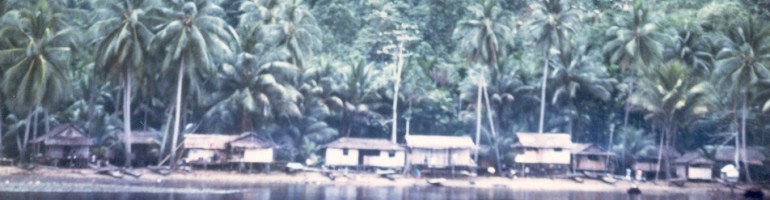
This story was published in the Jabêm school Buku Sêsamŋa II [Book for Reading, 2d. ed.], edited by M. Lechner and Nêdeclabu Male (Madang: Lutheran Mission Press, 1955), pp. 99–100. I have inserted hyphens between stems and affixes and supplied the English (and Tok Pisin) glosses and free translation.
Nombaŋ tê-tu Sibôma.
Numbami ol-become S.
The Numbami become the Siboma.Gêmuŋ-geŋ lau Sibôma nêŋ ŋaê teŋ Nombaŋ.
Before-ly people S. their name one N.
In the past, one name of the Siboma people was Numbami.Êsêac sê-ŋgông gwêc atom,
they ol-dwell sea not
They didn’t live on the seacoast;sê-ŋgông lôc ŋamuŋa tê-tôm lau saleŋ-ŋa.
ol-dwell hill behind ol-match people bush-of
they lived up in the hills like bush people.Têm teŋ acgom ma mêŋ-sê-ŋgông gwêc naŋ ŋam amboac tonec.
Time one first and come-ol-dwell sea, that reason like this
Then one time, they came down to the sea, for the following reason.Bêc teŋ ma êsêac Nombaŋ mêŋ-sê-kôc awê teŋ aŋga Kuwi-nêŋ malac.
day one and ol Numbami come-ol-get woman one from K.-their village
One day, the Numbami came and got a woman from the Kuwi village.Kuwi-nêŋ ŋac teŋ kê-daguc gê-ja Nombaŋ
K.-their man one em-follow em-go N.
One Kuwi man went after the Numbamima kê-masaŋ biŋ gê-dêŋ êsêac gebe
and em-arrange word em-to ol SAY
and set them straight, saying“A-kêŋ awê tau ê-ndêŋ aê ja-kôc ja-mu ja-na ê-tiam.”
yup-send woman self em-to mi mi-get mi-back mi-go em-again
“Give me that woman and I’ll take her back again.”Ma lau Nombaŋ têntac ŋandaŋ kê-sa
and people N. bellies heat em-rise
And the Numbami people got angryma sê-sôm eŋ gebe
and em-tell em SAY
and scolded him, saying“Ô-sôm paŋ-geŋ ô-kô,
yu-tell like-ly yu-stand
“If you stand there talking like that,aêac oc a-nac aôm êndu
mip later mip-hit yu dead
we’re going to kill youma a-niŋ aôm su,
and mip-eat yu FIN
and eat you upma aôm-nêm lau oc sê-nam kauc aôm.”
and yu-your people later ol-hold mind yu
and your relatives won’t recognize you.”Ŋac tonaŋ kê-têc
man that em-fear
The man was afraidma gê-êc gê-mêŋ malac kê-tiam
and em-flee em-come village em-again
and fled back to his village againma gê-jac-miŋ biŋ samob tonaŋ gê-dêŋ nê lau.
and em-hit-story word all that em-to his people
and told his relatives the whole story.Nê lau sê-ŋô biŋ tonaŋ e têntac ŋandaŋ kê-sa
his people ol-hear word that till bellies heat em-rise
His relatives listened to those words until they got very angryma sê-kêŋ jaeŋ gê-dêŋ lau Buso to Lababia
and ol-send message em-to people B. with L.
and sent a message to the Buso and Lababia peopleac sê-ja sê-wiŋ êsêac
ol ol-go ol-join ol
and the latter went and joined with themma sê-kic biŋ sê-wiŋ tauŋ
and ol-bind word ol-join selves
and planned togetherma se-no laki sê-wiŋ tauŋ e sê-lic laki ke-letoc ŋajam.
and ol-cook ginger ol-join selves till ol-see ginger em-boil good
and consulted the war oracle together until they saw the ginger boiled over well.Bêbêc-geŋ dê-di
morning-ly ol-arise
In the morning, they got underwayma sê-sêlêŋ gê-dêŋ ocsalô e kêtulala
and ol-walk em-at forenoon till evening
and walked from morning until eveningma tê-dabiŋ malac.
and ol-near village
and they came near the village.Sê-pi malac sebeŋ atom,
ol-up village rapid not
They didn’t go up to the village right away;sê-ê tauŋ susu sê-moa e gêbêcauc.
ol-pull selves away ol-stay till nightfall
they held back until nightfall.Lau Nombaŋ samob sê-pi nêŋ malac
People Numbami all ol-ascend their village
The Numbami all went up to their villagema sê-êc bêc acgom,
and ol-lie night first
and lay down for the night first,go êsêac lau Kuwi to Buso ma Lababia sê-wa êsêac auc kê-tôm nêŋ andu
then ol people K. with B. and L. ol-sit ol closed ol-match their house
then the Kuwi and Buso and Lababia people surrounded each housema se-jop sê-ŋgông e geleŋŋa.
and ol-guard ol-dwell till daybreak
and kept watch until daybreak.Ŋawê kê-sa
Light em-rise
It got lightma lau ŋacjo sê-sa ja-tê-tôc tauŋ gê-dêŋ lau Nombaŋ.
and people enemy ol-rise go-ol-show selves em-to people Numbami
and the enemies got up and went and showed themselves to the Numbami.Ac sê-lic êsêac su
ol ol-see ol FIN
The latter saw themma sê-sôm gebe
and ol-tell SAY
and they said,“Galoc tonec ta-mansaŋ biŋ
Now this yumi-arrange word
“This time, we’re going to set things straightma ta-no gêŋ êsêac
and yumi-cook thing ol
and cook them foodma ta-kêŋ nêŋ awê sê-kôc sê-mu sê-na ê-tiam.”
and yumi-send their woman ol-get ol-back ol-go em-again
and send their woman for them to take back away again.”Lau Buso to Lababia sê-ŋô biŋ tonaŋ e têntac ŋandaŋ
People B. with L. ol-hear word that till bellies hot
The Buso and Lababia people listened to this until they got angryma se-eŋ oliŋ tauŋ
and ol-eat groan selves
and were consumed with ragema sê-sôm lau Kuwi-ŋa gebe
and ol-tell people K.-of SAY
and they scolded the Kuwi people, saying“Amac embe a-ŋgôm gêŋ amboac tonec
yup if yup-make thing like this
“If you do like thisma a-kêŋ jaeŋ ê-ndêŋ aêac lau gamêŋ baliŋ-ŋa atom
and yup-send message em-to mip people place long-of not
then don’t send a message to us people from faraway places.A-be a-ŋgôm asageŋ ê-jô aêac-ma lêŋ baliŋ
yup-say yup-make what em-afflict mip-our way long
What are you doing to make us come all this waynaŋ a-sêlêŋ gêbêc baliŋ e geleŋŋa.
that mip-walk night long till daybreak
that we walked all night long?”Sê-sôm su
ol-scold FIN
They finished arguingma siŋ kê-pi ŋamalac
and fight em-upon humans
and fighting broke out among the menma sê-jac lau Nombaŋ samob e gê-bacnê.
and ol-hit people all till em-finish
and they beat all the Numbami until they were done.Lau ŋagêdô naŋ siŋ gê-wa êsêac êliŋ-êliŋ sê-moa saleŋ.
People other that war em-divide ol scattered ol-stay bush
The other people, whom the fighting had scattered about, they stayed in the bush.Sê-moa acgom
ol-stay first
They stayed away at firstma sê-jac tauŋ sa sê-pi tageŋ kê-tiam
and ol-hit selves up ol-upon one em-again
and then gathered themselves up in one place againma sê-wi malac laŋgwa sing
and ol-carry village old away
and abandoned the old villagema sê-êc sê-sa gwêc sê-ja.
and ol-lie ol-out sea ol-go
and stayed out at the seacoast.Ja-sê-kwêc malac wakuc gê-êc gwêc
go-ol-dig village new em-lie sea
They went and built a new village on the seacoastma sê-sam tauŋ se-be Sibôma.
and ol-call selves ol-say S.
and called themselves Siboma.Ma malac laŋgwa taŋ sê-wi siŋ,
and village old which ol-carry away
And the old village that they abandoned,gêgwaŋ to ka kê-pi e gê-jam auc.
grass with tree em-up till em-hold covered
grass and trees have overgrown it.
 Tananggo Binga Numbami